
PlayStation ROMs
Sony · 1994 · 277 games
Showing 1–30 of 277 · Most popular
This page lists 277 PlayStation (PS1) ROMs, sorted by how often each one is downloaded. The PS1 was released by Sony in 1994. The games archived here originally came out between 1985 and 2006.
The most common genres in this library are Action, Role-Playing, Platformer and Fighting. The most downloaded titles right now are Crash Bandicoot, Castlevania - Symphony Of The Night and Resident Evil 3 - Nemesis.
To play these files you need a PS1 emulator — DuckStation is the one most people use. Each download below is a game file, not the emulator itself.
- Manufacturer
- Sony
- Released
- 1994
- ROMs archived
- 277
- Games from
- 1985–2006
- Regions
- USA, Europe and Japanese
- Emulators
- DuckStation
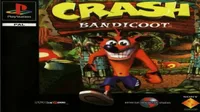
Crash Bandicoot
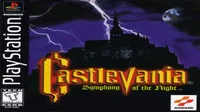
Castlevania - Symphony Of The Night
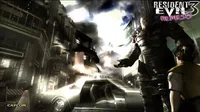
Resident Evil 3 - Nemesis
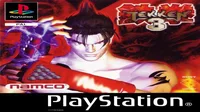
Tekken 3
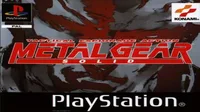
Metal Gear Solid (EU)
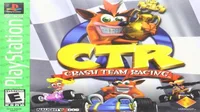
Crash Team Racing
![Silent Hill [SLUS-00707]](https://pub-239d93e5e7c64e418785e0c168f6825b.r2.dev/img/roms/thumbs/silent-hill-slus-00707.webp)
Silent Hill [SLUS-00707]
![Gran Turismo 2 - Simulation Mode [SCUS-94488]](https://pub-239d93e5e7c64e418785e0c168f6825b.r2.dev/img/roms/thumbs/gran-turismo-2-simulation-mode-scus-94488-PSX.webp)
Gran Turismo 2 - Simulation Mode [SCUS-94488]
![Tony Hawk S Pro Skater 2 [SLUS-01066]](https://pub-239d93e5e7c64e418785e0c168f6825b.r2.dev/img/roms/thumbs/tony-hawk-s-pro-skater-2-slus-01066.webp)
Tony Hawk S Pro Skater 2 [SLUS-01066]
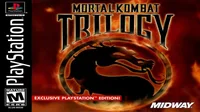
Mortal Kombat Trilogy
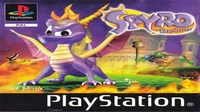
SPYRO THE DRAGON (EU)
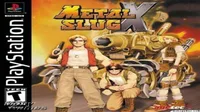
Metal Slug X
![Spiderman [SLUS-00875]](https://pub-239d93e5e7c64e418785e0c168f6825b.r2.dev/img/roms/thumbs/spiderman-PSX.webp)
Spiderman [SLUS-00875]
![Marvel Vs. Capcom - Clashofthe SuperHeroes[01059]](https://pub-239d93e5e7c64e418785e0c168f6825b.r2.dev/img/roms/thumbs/marvel-vs-capcom-clashofthe-superheroe-PSX.webp)
Marvel Vs. Capcom - Clashofthe SuperHeroes[01059]
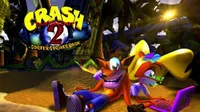
Crash Bandicoot 2 - Cortex Strikes Back
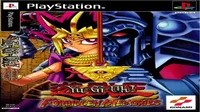
Yu-Gi-Oh! - Forbidden Memories
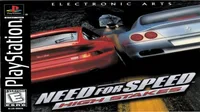
Need For Speed - High Stakes
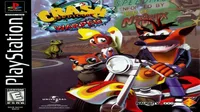
Crash Bandicoot 3 - Warped
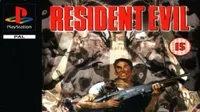
Resident Evil
![Medal Of Honor [SLUS-00974]](https://pub-239d93e5e7c64e418785e0c168f6825b.r2.dev/img/roms/thumbs/medal-of-honor-slus-00974-PSX.webp)
Medal Of Honor [SLUS-00974]
![GRAND THEFT AUTO 2 [SLUS-00789]](https://pub-239d93e5e7c64e418785e0c168f6825b.r2.dev/img/roms/thumbs/grand-theft-auto-2-PSX.webp)
GRAND THEFT AUTO 2 [SLUS-00789]
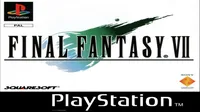
Final Fantasy VIII (EU)
![Disney's Hercules [SLUS-00529]](https://pub-239d93e5e7c64e418785e0c168f6825b.r2.dev/img/roms/thumbs/disney-s-hercules-slus-00529-PSX.webp)
Disney's Hercules [SLUS-00529]
![Dino Crisis [SLUS-00922]](https://pub-239d93e5e7c64e418785e0c168f6825b.r2.dev/img/roms/thumbs/dino-crisis-slus-00922-PSX.webp)
Dino Crisis [SLUS-00922]
![Tomb Raider Greatest Hits [SLUS-00152]](https://pub-239d93e5e7c64e418785e0c168f6825b.r2.dev/img/roms/thumbs/tomb-raider-greatest-hits-slus-00152.webp)
Tomb Raider Greatest Hits [SLUS-00152]
![Driver__[SLES-01816]](https://pub-239d93e5e7c64e418785e0c168f6825b.r2.dev/img/roms/thumbs/driver-sles-01816-PSX.webp)
Driver__[SLES-01816]
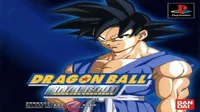
Dragon Ball GT - Final Bout
![Rayman [SLES-00049]](https://pub-239d93e5e7c64e418785e0c168f6825b.r2.dev/img/roms/thumbs/rayman-sles-00049-PSX.webp)
Rayman [SLES-00049]
![Doom [NTSC-U] [SLUS-00077]](https://pub-239d93e5e7c64e418785e0c168f6825b.r2.dev/img/roms/thumbs/doom-ps1-thumb-slus-00077.webp)
Doom [NTSC-U] [SLUS-00077]
![Medievil [SCUS-94227]](https://pub-239d93e5e7c64e418785e0c168f6825b.r2.dev/img/roms/thumbs/medievil-ps1-thumb-scus-94227.webp)
Medievil [SCUS-94227]
About the PlayStation
Sony entered the console market in 1994 after a collaboration with Nintendo collapsed, and reshaped it within a generation. The PlayStation's CD-ROM format cut manufacturing costs dramatically, which brought third-party developers across in numbers and allowed full-motion video and recorded soundtracks that cartridges could not hold.
Its library is where the industry worked out 3D in public, in real time, often badly and occasionally brilliantly. Over 100 million consoles sold, and the design language of modern gaming starts here.
Choosing a PlayStation emulator
DuckStation is the current recommendation. It is accurate, fast, handles the library almost completely, and includes modern features like texture filtering, widescreen hacks and per-game settings. Beetle PSX through RetroArch is the alternative for accuracy purists.
ePSXe remains well known but is no longer the best choice; it depends on a plugin architecture that DuckStation has made unnecessary.
The BIOS requirement
DuckStation requires a PlayStation BIOS image to run, and it is region-specific — a Japanese BIOS for Japanese discs, and so on. This must be dumped from a console you own.
Unlike the PS2, some emulators offer high-level BIOS replacements, but compatibility suffers. Using a real BIOS dump is strongly preferred.
Fixing the wobble
PlayStation hardware had no sub-pixel precision, so polygons visibly jitter as they move — a distinctive artefact of the era. DuckStation's PGXP option reconstructs the missing precision and largely eliminates it.
Whether to enable it is taste. Some people consider the wobble part of the look; others find it unwatchable on a large screen.
Frequently asked questions
- What file formats do PlayStation games use?
- Usually .bin with a .cue sheet, or .chd compressed images. Always keep the .cue file with the .bin; without it, multi-track audio will not play.
- Why does the music not play in some games?
- Missing or incorrect .cue files. CD audio tracks are separate from the data track, and the cue sheet is what tells the emulator where they are.
- Do I need a memory card file?
- Yes, and emulators create one automatically. Each game writes saves to it exactly as on the original hardware.