
Nintendo Entertainment System ROMs
Nintendo · 1983 · 1,094 games
Showing 1–30 of 1,094 · Most popular
This page lists 1,094 Nintendo Entertainment System (NES) ROMs, sorted by how often each one is downloaded. The NES was released by Nintendo in 1983. The games archived here originally came out between 1977 and 2013.
The most common genres in this library are Platformer, Action, Sports and Role-Playing. The most downloaded titles right now are Super Mario, Super Mario Bros. 3 and Tetris.
To play these files you need a NES emulator — Mesen and FCEUX are the ones most people use. Each download below is a game file, not the emulator itself.
- Manufacturer
- Nintendo
- Released
- 1983
- ROMs archived
- 1,094
- Games from
- 1977–2013
- Regions
- USA, Japan and Japanese
- Emulators
- Mesen and FCEUX
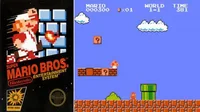
Super Mario
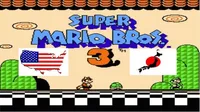
Super Mario Bros. 3
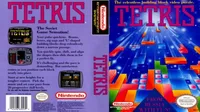
Tetris
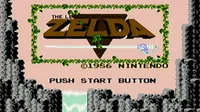
The Legend of Zelda
Contra
Super Mario 2
Punch-Out!!
Super Mario World
Castlevania
350-in-1 (Menu)
Metroid
TMNT
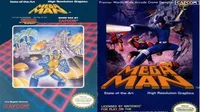
Mega Man
Duck Tales
Kirby's Adventure
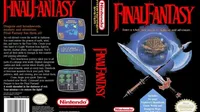
Final Fantasy
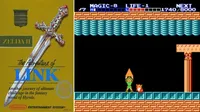
Zelda 2
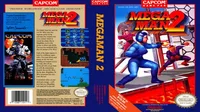
Mega Man 2
Excitebike
Galaga
Double Dragon
Zelda - The Legend Of Zelda
Battletoads
Ninja Gaiden
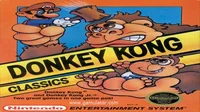
Donkey Kong Classics
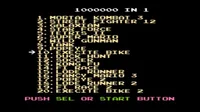
Super 1000000-in-1 (Menu)
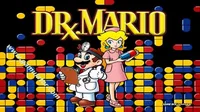
Dr. Mario
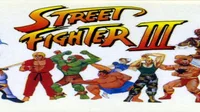
Street Fighter 3
Mega Man 3

Batman - The Video Game
About the Nintendo Entertainment System
The Nintendo Entertainment System reached North America in 1985, two years after the Famicom launched in Japan and into a market that had just collapsed. Retailers would not stock video games, so Nintendo sold it as a toy with a robot accessory and a light gun, and it worked.
The console established the conventions the industry still runs on: the directional pad, the licensing model, the idea that a platform holder controls what appears on its hardware. Its library is where a great many genres were named.
Choosing an NES emulator
Mesen is the strongest option, with cycle-accurate emulation, extensive debugging tools and excellent compatibility including obscure mappers. FCEUX and Nestopia are both long-established and remain perfectly usable.
No BIOS is required. NES emulation is mature enough that almost any current emulator will run almost anything.
Mappers and why some games fail
NES cartridges contained circuitry that extended the console's abilities, and dozens of distinct mapper designs exist. An emulator must implement each one separately.
Common mappers are universally supported. Failures are usually unlicensed cartridges, Famicom peripherals or obscure regional releases using hardware few emulators implement.
PAL, NTSC and the Famicom
The Japanese Famicom and the NES are the same architecture in different cases, so Famicom ROMs run in NES emulators. European PAL releases run at 50Hz and are noticeably slower than their NTSC counterparts.
Where both versions exist, NTSC is generally the one to choose for speed and music pitch.
Frequently asked questions
- What is an iNES header?
- A 16-byte block at the start of a .nes file telling the emulator which mapper the cartridge used. A wrong header is the usual reason a ROM loads to a black screen.
- Do NES games need a BIOS?
- No. The console had no boot ROM, so the game file is all that is required.
- Why do sprites flicker?
- The hardware could only draw eight sprites per scanline, and developers deliberately flickered them to work around it. Accurate emulators reproduce this; many offer an option to disable the limit.